
PCB Surface Finish
The finish is the last thing that happens to a board and the first thing assembly reacts to. Six options, one of which is right for your pads — and the reason is usually flatness or loss, not price.
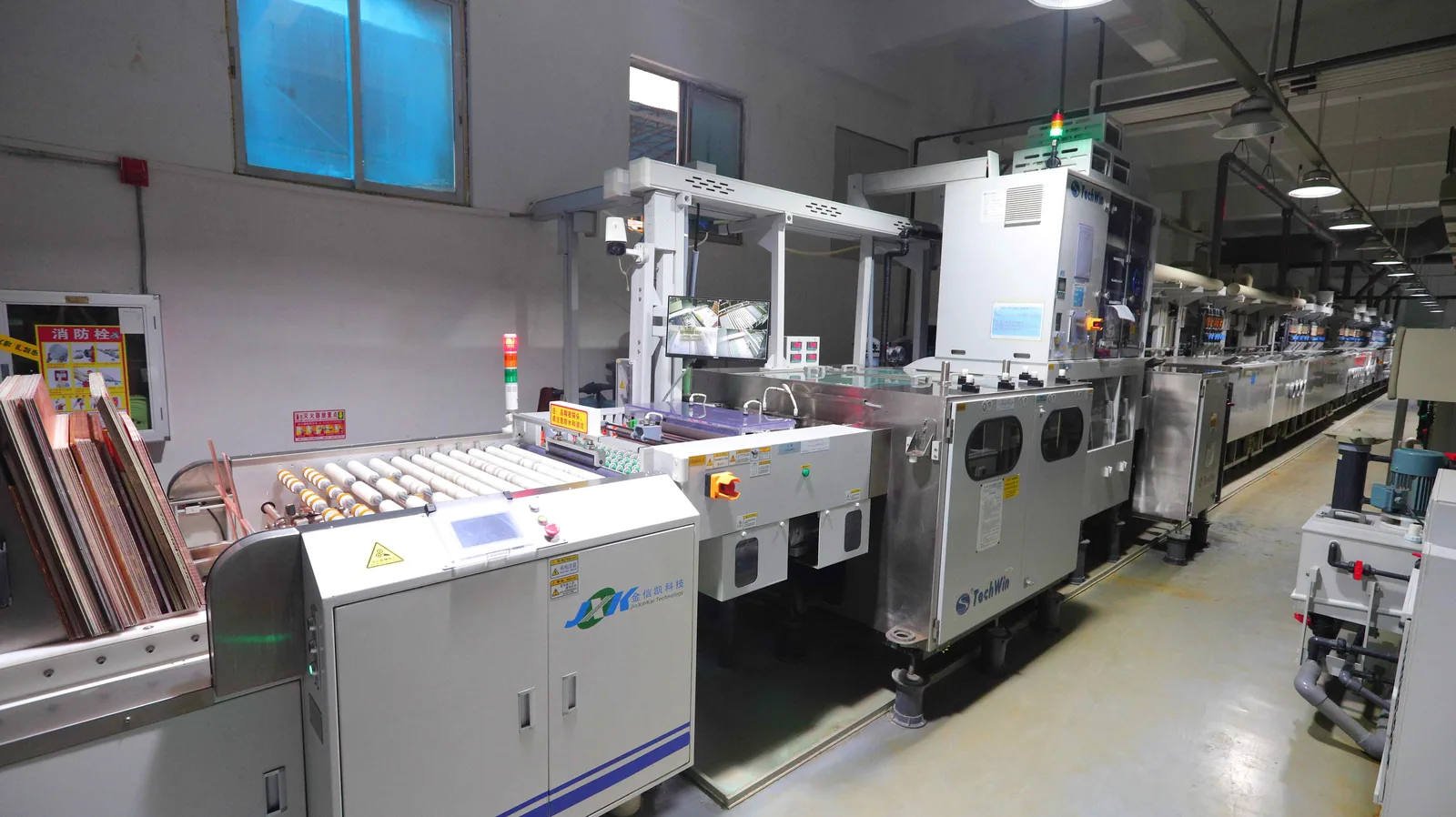
Four properties decide the finish, and only one of them is cost.
A finish has to do four jobs: keep the copper solderable until assembly, present a pad flat enough for the component, survive the reflow cycles the assembly needs, and stay reliable for the life of the product. Every one of the six finishes trades one of those against another. ENIG buys flatness with a nickel barrier; HASL buys cost with an uneven surface; OSP buys flat pads with a short clock.
So the choice is made against the pad geometry and the assembly route, not against a price list. Two questions remove four options immediately: whether anything gets wire bonded, and whether the board has an edge connector. What is left is settled by pitch, by loss budget, and by how long the board sits before it is populated.
What each one puts on the copper, and what it takes away.
Nickel-barrier finishes
| Finish | What sits on the copper | Best for | Where it bites |
|---|---|---|---|
| ENIG | Electroless nickel 120–240 µin under immersion gold 3–6 µin | Fine-pitch BGA, coplanarity-critical assemblies, wire bonding | Black pad if the bath drifts; the nickel layer is brittle in flex |
| Hard gold | Gold over nickel, cobalt-hardened | Edge connectors and repeated insertion cycles | Cost; not a wire-bond surface |
Solder-based and organic
| Finish | What sits on the copper | Best for | Where it bites |
|---|---|---|---|
| HASL-LF | Lead-free solder, levelled with hot air | Cost-first boards at 0.5 mm pitch and coarser | Uneven pad height; thermal shock on thin boards |
| OSP | Organic film over bare copper | Short-life builds, fine pitch, pads that must stay flat | Shelf life counted in weeks, not months; test points need opening |
| Immersion tin | Thin tin over copper | Fine pitch where the ENIG premium is hard to justify | Short shelf life; whisker risk on long-life product |
Low-loss
| Finish | What sits on the copper | Best for | Where it bites |
|---|---|---|---|
| Immersion silver | Thin silver over copper | Lowest insertion loss above 10 GHz | Tarnishes; sulphur-sensitive; needs handling discipline |
Ceramic substrates cannot take HASL-LF or OSP at all — the list narrows to ENIG, immersion silver, immersion tin or hard gold. PTFE structures are not recommended for HASL either. Every build runs to IPC Class 2 standard, Class 3 on request.
Four questions, in this order.
Wire bond in the route?
Then the surface is ENIG or soft gold. Hard gold is not a bonding surface, whatever the pad looks like.
Edge connector or repeated insertion?
Hard gold, on the fingers only. The rest of the board usually stays ENIG.
Pitch below 0.4 mm, or coplanarity critical?
ENIG or immersion silver. Levelled solder cannot hold that window across a panel.
Cost first, coarse pitch, short life?
HASL-LF. Choose OSP instead when the pads still have to be flat.
Where these finishes fail, and what stops it.
Black pad is a bath problem
The failure comes from nickel corroded during the gold step, not from the gold itself. Phosphorus content, immersion time and nickel thickness are held to a window and recorded per lot, so a drifting bath is caught on the coupon rather than in your assembly house.
Shelf life is stated, not implied
OSP is counted in weeks, immersion tin in months, ENIG in years. The figure comes with the shipment because it decides whether the board can wait for your build slot.
Both sides can differ
Hard gold on the fingers with ENIG everywhere else is routine. The finish is specified per side at quotation, including any area that has to stay free of nickel.
Finish undecided and the stack-up waiting?
Send the assembly route and the pad geometry. The recommendation comes back with the trade-off named.
The comparisons that come up most.
Is ENIG worth the premium over HASL?
It is not a premium for its own sake — it is the only way to hold a flat pad on fine pitch. Once the component pitch drops below about 0.5 mm, levelled solder cannot keep the window and the assembly yield pays for the difference. Above that pitch, on a through-hole board, HASL-LF is cheaper and perfectly reliable.
How is black pad prevented?
By controlling the nickel, not the gold. Phosphorus in the deposit, the time spent in the immersion gold bath and the nickel thickness are all held to a window, and the coupon is cross-sectioned rather than eyeballed. A bath that drifts produces the brittle black layer even when the surface still looks acceptable.
How long can an OSP board wait before assembly?
Weeks rather than months, and fewer if the boards are stored warm or handled without gloves. OSP also survives a limited number of reflow passes, so double-sided assembly with rework needs the count checked before the finish is chosen.
What is hard gold actually for?
Repeated mechanical contact: edge connectors, card fingers, spring contacts. The cobalt in the deposit raises hardness so the gold survives insertion cycles. It is a poor wire-bond surface and an expensive way to cover a whole board, which is why it is usually confined to the fingers.
Can the two sides carry different finishes?
Yes, and it is common — hard gold on a connector edge with ENIG across the rest. It is set per side at quotation, along with any area that must stay nickel-free for a specific assembly process.
Want the finish matched to your assembly route?
Send the drawing and tell us how the board gets populated. Quote in 24 hours, finish named per side.