
PCB Assembly Services
Bare boards leave the PCB line and walk to assembly on the same floor. SMT, through-hole, mixed technology and component sourcing are planned as one job, with one BOM and one DFM review.
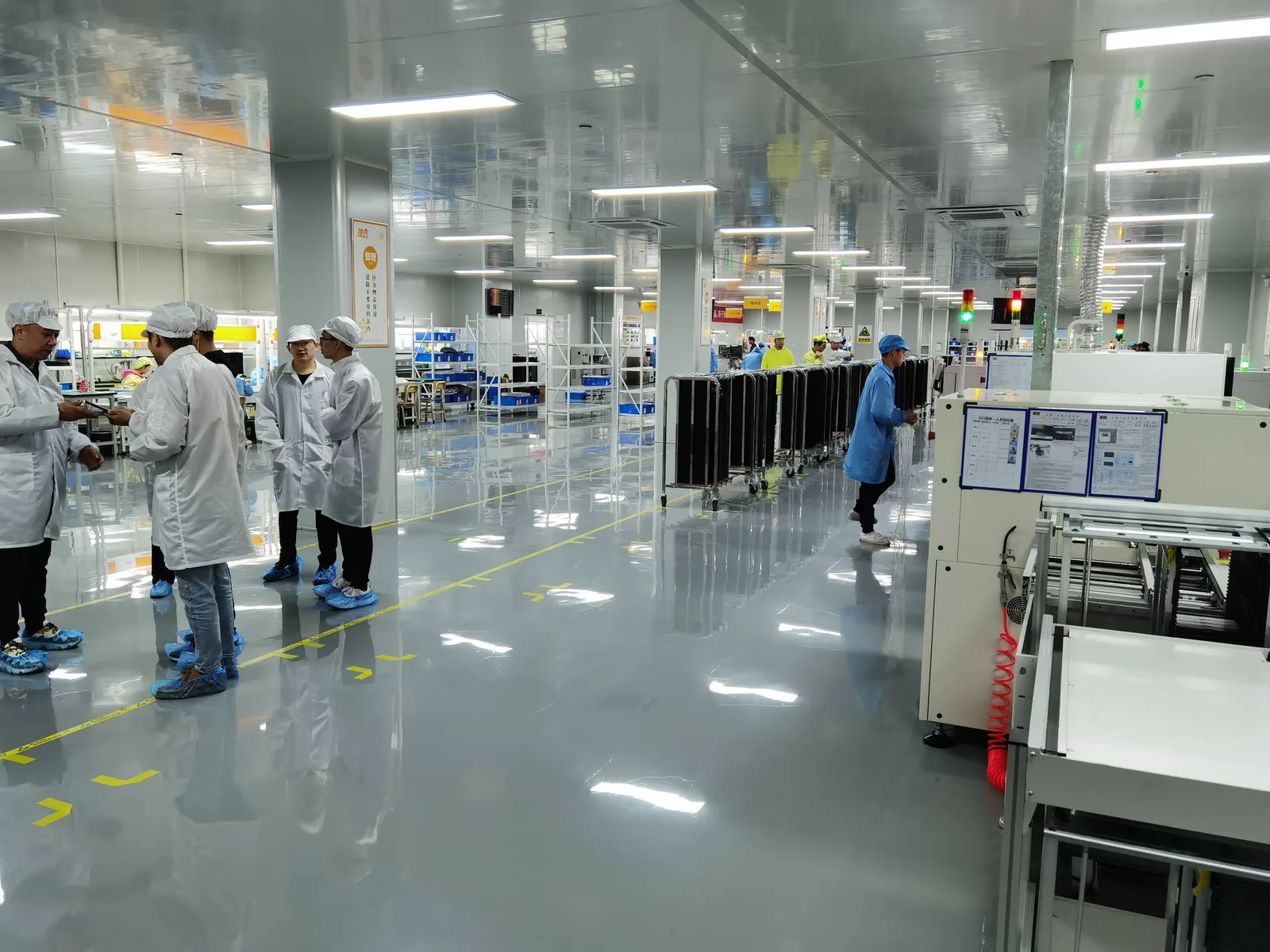
Four services, one floor, one set of numbers.
Most boards are mixed technology: surface-mount on both sides, with through-hole connectors, transformers or heavy capacitors inserted afterwards. That mix decides the sequence, the tooling and where the failure risk sits. Splitting it between a placement house and a soldering house means the second one inherits the first one’s decisions.
So the whole assembly is quoted as one order. The numbers below are the ones the CAM team works against, published as limits rather than targets. Where a design falls outside them, it comes back at DFM review — not at first article, when the tooling is already cut.
Three ways to put the parts on the table.
Turnkey, partial and consigned
| Model | What you send | What we do |
|---|---|---|
| Turnkey | A BOM with manufacturer part numbers and quantities | Source every line through Digi-Key, Mouser, Arrow or an authorised distributor, and raise lifecycle and shortage risks before the order is released |
| Partial turnkey | A BOM plus the parts you already hold | Source the remainder, then kit your parts and ours together and reconcile the count before the line is set |
| Full consignment | A BOM, every component, and the bare boards | Verify identity, quantity and moisture sensitivity on receipt, then assemble to your kit without substituting anything |
Substitutions are never automatic. A part we cannot source — or can only source from the open market — comes back to you for written approval before it reaches kitting. Every build runs to IPC Class 2 standard, Class 3 on request.
Where each process is explained.
SMT Assembly
Fine-pitch placement with paste inspection before and X-ray after — including 01005 passives and 0.4 mm BGA.
Through-Hole Assembly
Wave, selective wave and robotic iron, chosen by what else is already soldered on the bottom side.
Mixed Technology
SMT and through-hole on one board, sequenced as two passes and reviewed as one BOM.
Component Sourcing
Where each BOM line comes from, what approval it needs, and what record travels with the boards.
How an assembly moves through the building.
DFM and BOM review
Gerber, BOM and CPL checked against each other; apertures and keep-outs agreed before tooling.
Kitting
Boards and parts counted to the BOM; moisture-sensitive devices verified and baked if needed.
Stencil and SPI
Paste printed through a laser-cut stencil, then measured after every print.
Placement
Fine-pitch packages vision-aligned; first article inspected before the run is released.
Reflow
One profile per paste and per package, recorded rather than reused from a similar board.
Through-hole
Inserted after reflow, so the surface-mount joints are never cycled twice.
Wave or selective
Selective where bottom-side surface-mount rules out a full wave.
Test and release
Optical and X-ray inspection, then ICT, boundary scan or functional test as specified.
Have a BOM nobody wants to quote?
Send it with the Gerbers and the CPL. A CAM engineer reviews the kit and the technology mix before anyone prices it.
What engineers ask before the first assembly order.
What files do you need in order to quote an assembly?
Gerbers or an ODB++ package, a BOM with manufacturer part numbers and quantities, and a CPL or centroid file. An assembly drawing helps where polarity or orientation is ambiguous. For double-sided builds, say which side each part lands on — it decides the pass order and therefore the price.
Can you assemble a prototype and then the production run?
Yes, and it is the usual path. Prototype quantities start at a single board on the same line with the same inspection, so the process that was proven at one piece is the process that runs at volume. What changes is the tooling, not the workmanship standard.
How is mixed technology different from a through-hole order?
A mixed board has surface-mount parts as well, which forces two passes: reflow first, then wave or selective soldering for the through-hole joints. A through-hole-only board skips the surface-mount stage entirely. The distinction matters because the second pass has to protect what the first pass already soldered.
Who supplies the components?
Any of the three models on this page: turnkey, partial turnkey or full consignment. Large through-hole parts — transformers, heatsinks, cased capacitors — are often customer-supplied even on turnkey orders, because the mechanical fit is design-specific.
How is the acceptance class decided?
Class 2 is the default and covers most industrial and commercial work. Class 3 is quoted on request for medical, aerospace and defence builds, and the class is named on the certificate rather than implied. Soldering workmanship is inspected to IPC-A-610 and J-STD-001.
Ready to assemble the first build?
Send the BOM, the Gerbers and the CPL. Quote in 24 hours, with sourcing risks flagged before they become a delay.