
Electronic Component Sourcing
A counterfeit part arrives with the right marking, the right date code and the wrong die. Sourcing is a control process before it is a price comparison.
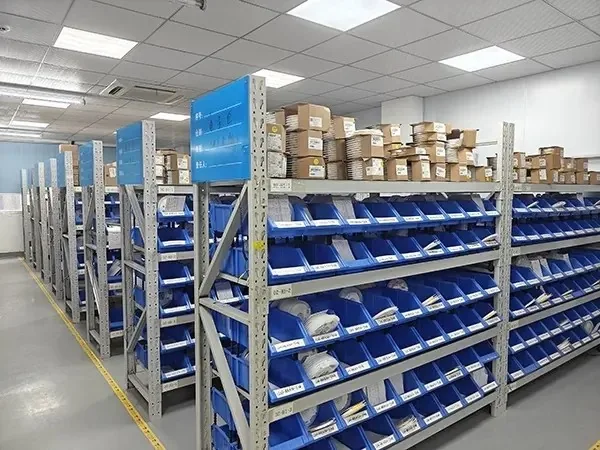
The cheapest line on a BOM is the one that ends a build.
Component risk does not look like risk at the time of purchase. A part bought below market from an unverified source photographs identically to the genuine one, passes a visual check, and fails in the field eighteen months later — or worse, passes your functional test and fails in the customer’s hands.
So every line is treated as a question with three answers: where it comes from, who approved it, and what record survives the order. The chain below is the order those questions get asked in, and it is the same chain whether you send a BOM for turnkey sourcing or consign the parts yourself.
Not every line needs the same channel.
Sourcing routes
| Part type | Where it comes from | What you get with it |
|---|---|---|
| Active parts on a live BOM | Franchised or authorised distributor — Digi-Key, Mouser, Arrow | Distributor invoice and lot code, recorded against the order |
| Long-lead or allocated parts | Authorised stock first; broker only with your written approval | Approval before purchase, verification before kitting |
| Obsolete and last-time-buy | Distributor stock, or a last-time buy agreed with you | Lifecycle note at DFM review, so the next build is not a surprise |
| Customer-supplied parts | Your kit, consigned or partial | Counted, identified and moisture-checked on receipt |
| Passives and mechanical commodity | Distributor, standard channel | Standard traceability; no approval step needed |
Anything that cannot be traced to a distributor lot does not go on the line, whatever the price and whoever recommends it. Every build runs to IPC Class 2 standard, Class 3 on request.
Six controls between a BOM line and a soldered joint.
BOM review
Every line checked for lifecycle status, second source and package before pricing.
Channel check
Authorised first. The open market only with written approval from you.
Incoming verification
Marking, date code, quantity and moisture sensitivity checked on receipt.
Kit reconciliation
Your parts and ours counted together; shortages raised before the line is set.
Traceability record
Lot and invoice per line, filed with the order and retained.
Release
No line enters kitting without a recorded source behind it.
Three rules that do not bend for a deadline.
The open market is a last resort, not a shortcut
Where a part is short, the escalation is to you, not to a broker. If a spot-market purchase is the only way to hold a schedule, the part, the supplier, the price delta and the verification step all come back for approval first. On a long-lead part that means a conversation weeks earlier than a surprise would have arrived.
Substitutions are never automatic
A substitute has to match form, fit and function, and even then it is your decision — a different manufacturer for the same part number is still a different part when the design is qualified. Nothing is swapped on the line to keep a schedule moving.
The record outlives the order
Lot, invoice and source are filed against every line, and retained with the order documentation. That record is what makes a field failure investigable a year later: which lot, which supplier, which date code, and whether the same lot went into other builds.
BOM with parts you cannot find?
Send it with the quantities and the target date. Availability and any substitution question come back with the quote.
What procurement teams ask first.
Where do turnkey components actually come from?
Franchised and authorised distributors as the default — Digi-Key, Mouser and Arrow cover most of what a BOM needs. Authorised stock is preferred over broker stock whenever both exist, even at a higher price, because the traceability is what the price buys.
Will you buy from an open-market broker?
Only with your written approval, and only after the authorised route has been exhausted and documented. Shortage items are where counterfeit risk concentrates, so the decision is yours to make with the facts in front of you rather than ours to make quietly.
Do you substitute parts without asking?
No. A substitution changes form, fit or function often enough that approval has to be per line. Where a second source is already written into the BOM as an approved alternate, it is used without a further question — that is what the alternate is for.
What documentation comes with a turnkey order?
A traceability record covering lot and source per line, alongside the inspection and test results for the assembly itself. For programmes that need a formal certificate, the conformance documentation is issued with the shipment and the quality class is named on it.
What happens if a suspect part is found on receipt?
It is quarantined and the line does not start on that kit. Marking, date code, packaging and quantity are checked against the distributor record at incoming, so a discrepancy is caught before kitting rather than after soldering — at which point the only remedy is to scrap the assembly, not the part.
Need the sourcing settled before the build starts?
Send the BOM with quantities. Quote in 24 hours, with long-lead and availability flagged in writing.