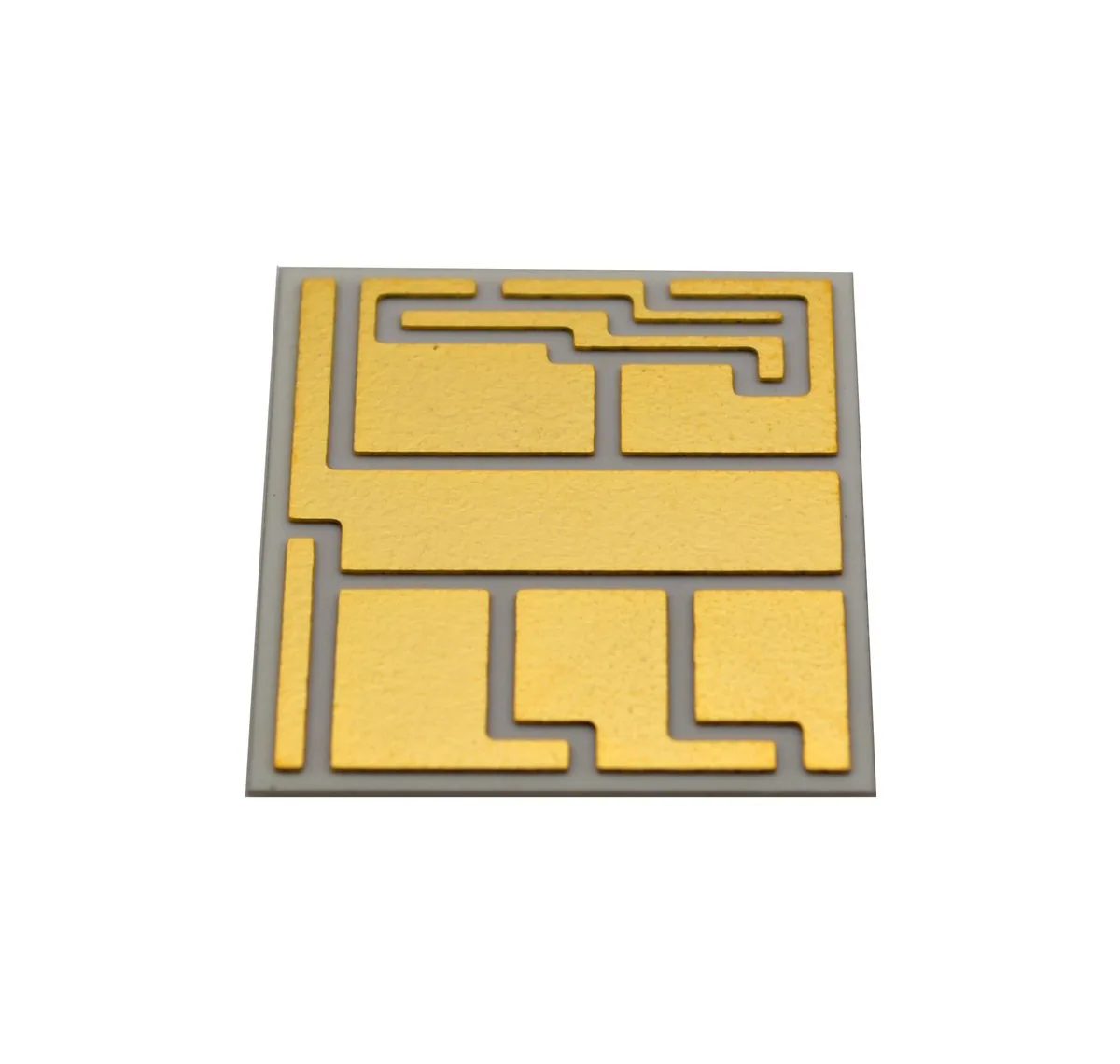
Ceramic vs FR-4: When the Substrate Becomes the Heat Sink
Alumina at 20–24 W/m·K and AlN at 170 against 0.2–0.3 for FR-4, plus the crossover arithmetic that decides which one ships.
Read article

A finish has four jobs: keep the copper solderable until assembly, present a pad flat enough for the part, survive the reflow cycles the assembly needs, and stay reliable for the life of the product. Every one of the six options trades one of those against another — and two questions remove four of them immediately.
The first is whether anything gets wire bonded. If so the surface is ENIG or soft gold; nothing else in this list is a bonding surface, whatever the pad looks like. The second is whether the board has an edge connector or a contact that gets inserted repeatedly. If so the fingers are hard gold, and the rest of the board usually is not.
What survives those two questions is decided by pitch, by loss budget, and by how long the board sits before it is populated. That is the whole decision, and it is why finish selection is a DFM conversation rather than a line item on a purchase order.
Electroless nickel at 120–240 µin under immersion gold at 3–6 µin gives a planar pad with a nickel barrier between the copper and the environment. The flatness is what buys fine pitch: a levelled solder surface cannot hold a coplanarity window across a panel, and a nickel-gold layer pair can. The barrier is also what holds solderability through long storage.
The failure mode is black pad, and it is a nickel problem rather than a gold one: the nickel corrodes during the immersion gold step, leaving a brittle black layer under a surface that still looks acceptable. Phosphorus content in the deposit, immersion time and nickel thickness are held to a window and recorded per lot, and the coupon is cross-sectioned rather than eyeballed. A bath that drifts produces the defect even when the panels pass a visual check.
Two limits worth knowing: the nickel layer is brittle in a flex bend zone, so ENIG on a dynamic flex area is a design error; and ENIG is not a wire-bond surface at every thickness — bonding needs the gold controlled as a bondable finish, not just present.
Hot air solder levelling dips the board in molten solder and blasts the excess off with air knives. It is the lowest-cost solderable surface with the best wetting of any mass finish, and everything it does badly comes from the same dip: surface tension holds more solder on large copper areas and around holes than on small pads, so deposit thickness swings by tens of microns across a panel.
That swing is the reason for the 0.5 mm line in our capability table. At 0.5 mm pitch and coarser, a levelled deposit is tolerable. Below it, the pad-to-pad height difference starts to defeat sphere standoff, and at 0.4 mm BGA and finer the switch to ENIG or immersion silver is hard rather than advisory. Press-fit holes are excluded for the same reason: the interference fit lives on a finished-hole tolerance that the deposit swing consumes by itself.
Lead-free changes the route rather than tweaking it. The pot runs hotter than tin-lead to hold enough superheat above the SAC liquidus, which is a heavier thermal load on the laminate — thin, high-layer-count or thermally marginal stack-ups deserve a review before the finish is committed. Ceramic substrates cannot take HASL at all, and PTFE structures are not recommended for it.
An organic film over bare copper gives a planar pad with no nickel and no precious metal, at a cost close to HASL. It is the natural answer for fine pitch on a cost-sensitive board, and for a build where the pads must stay flat but nothing gets bonded.
The limit is time, counted in weeks rather than months, and fewer if the boards are stored warm or handled without gloves. OSP also survives a limited number of reflow passes, so a double-sided assembly with rework has to have the count checked before the finish is chosen. Test points covered by the film need opening before probe test, which is a fixture decision rather than a process one.
Immersion silver is the lowest-loss finish in the list and the usual choice above 10 GHz, where conductor loss matters more than either cost or shelf life. It is planar and thin, so it suits fine pitch as well. The trade is handling: silver tarnishes, and sulphur in the environment or on a glove degrades the surface that was the reason for choosing it.
Immersion tin sits between OSP and ENIG on cost, is planar, and works well for press-fit and for double-sided reflow within a limited cycle count. Its risk is whisker growth on long-life product and an intermetallic budget that consumes the tin over time — which is why it is chosen for a defined assembly window rather than for a ten-year field life.
Hard gold is gold over nickel with cobalt in the deposit, which raises hardness so the surface survives repeated insertion. That is what it is for: edge connectors, card fingers, spring contacts. It is an expensive way to cover a whole board and a poor wire-bond surface, because the cobalt that provides the hardness is not what a bond wants.
The common arrangement is hard gold on the fingers and ENIG everywhere else, specified per side at quotation. If a drawing calls for hard gold across the board and wire bonding as well, one of the two requirements is wrong.
| Finish | What sits on the copper | Flatness | Shelf life | Cost index | Best fit |
|---|---|---|---|---|---|
| ENIG | Ni 120–240 µin, Au 3–6 µin | Planar | 12+ months | 1.0 | Fine pitch, press-fit, long storage |
| HASL-LF | Lead-free solder, air-levelled | Uneven, tens of µm pad to pad | 6–12 months | 0.6–0.7 | Cost-first, 0.5 mm pitch and coarser |
| OSP | Organic film on bare copper | Planar | Weeks, not months | 0.5–0.7 | Flat pads, short build window |
| Immersion silver | 0.1–0.2 µm silver | Planar | 6–12 months | 0.8 | Lowest loss above 10 GHz |
| Immersion tin | 0.8–1.2 µm tin | Planar | 6–12 months | 0.6–0.8 | Press-fit, limited reflow cycles |
| Hard gold | Gold over nickel, cobalt-hardened | Planar | 12+ months | 2.0+ | Edge connectors, repeated insertion |
Cost index is relative to ENIG on our quoting basis and moves with board density and copper area. Shelf life assumes conditioned storage at roughly 30 °C and 70% RH; HASL has no standard thickness window, so its figure is a supplier-process band rather than a specification.
It is not a premium for its own sake — it is the only way to hold a flat pad on fine pitch. Once component pitch drops below about 0.5 mm, levelled solder cannot keep the window and the assembly yield pays the difference. Above that pitch, on a through-hole board, HASL-LF is cheaper and perfectly reliable.
A press-fit joint lives on a finished-hole tolerance of about ±0.05 mm and a defined interference band. A finish that swings tens of microns hole to hole consumes that budget before the pin is inserted. ENIG, immersion silver, immersion tin and OSP are all thin and uniform; HASL is not.
Weeks rather than months, and fewer if the boards are stored warm or handled without gloves. OSP also survives a limited number of reflow passes, so double-sided assembly with rework needs the cycle count checked before the finish is chosen rather than after the panels are finished.
Yes, and it is common — hard gold on a connector edge with ENIG across the rest. The finish is specified per side at quotation, including any area that has to stay nickel-free for a specific assembly process.
Nickel corroded during the immersion gold step, not the gold itself. Phosphorus in the deposit, time in the gold bath and nickel thickness are held to a window and recorded per lot, and the coupon is cross-sectioned. A drifting bath produces the brittle layer even when the surface still looks acceptable.
Alumina at 20–24 W/m·K and AlN at 170 against 0.2–0.3 for FR-4, plus the crossover arithmetic that decides which one ships.
Read article
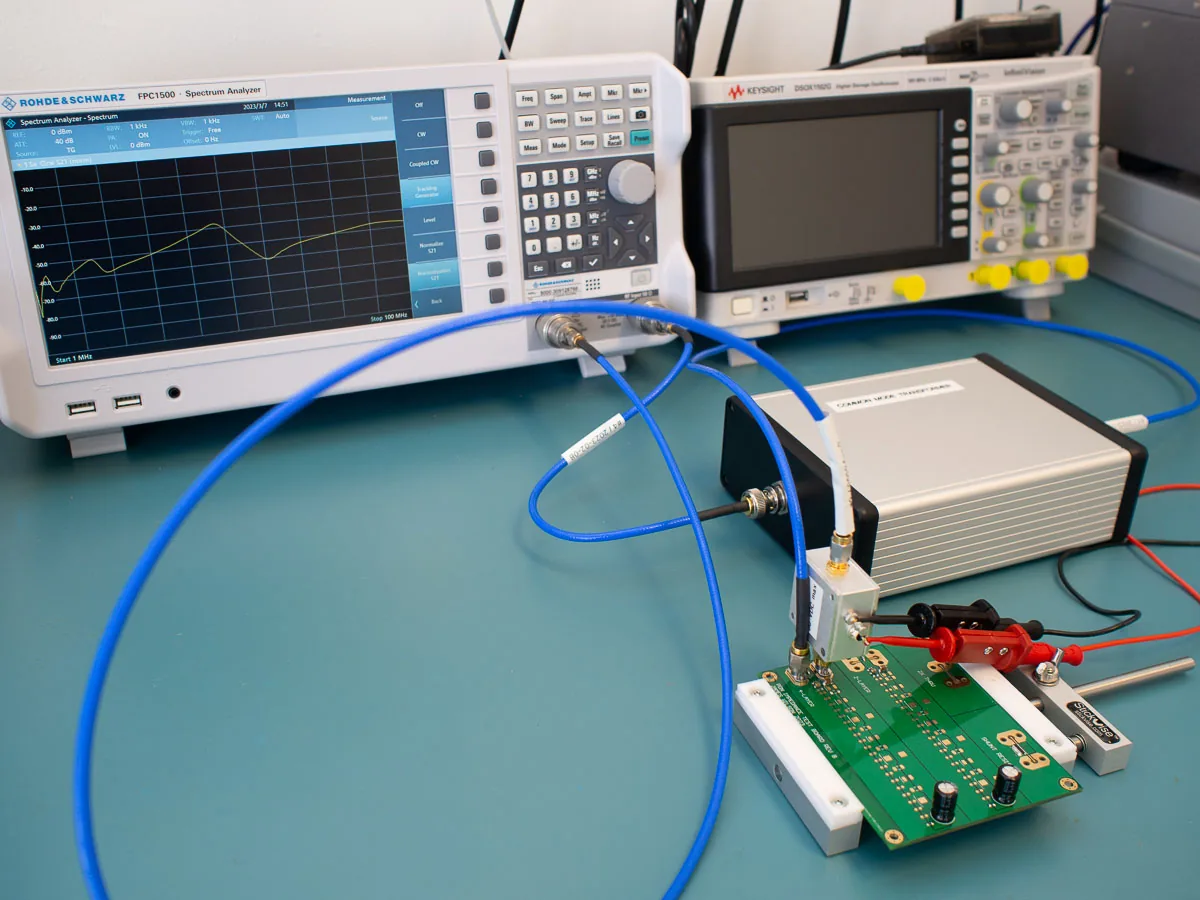
Four tolerances, four sensitivities, and why the root-sum-square lands at 7.1% while the worst case reaches 12%.
Read article
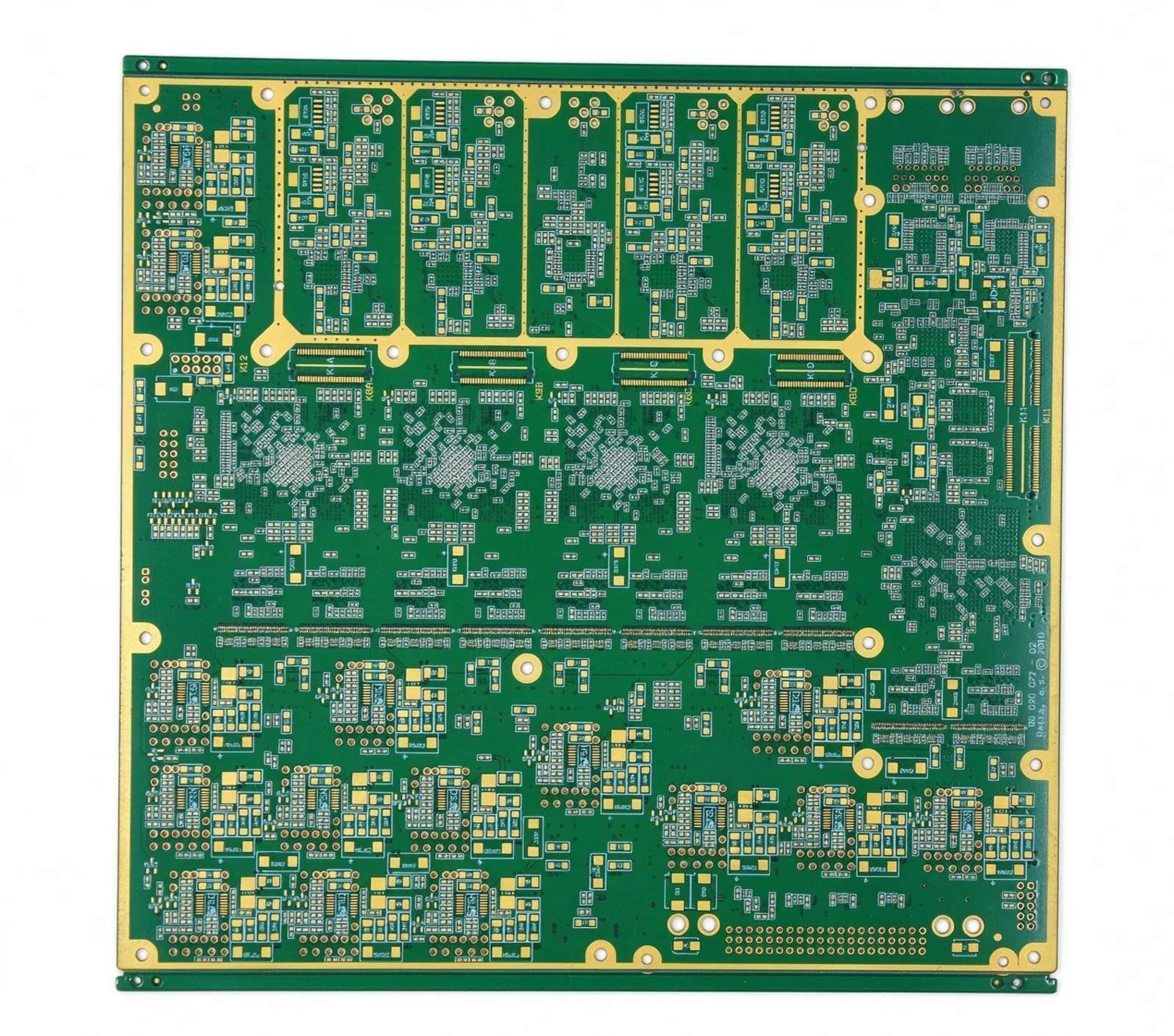
What each BGA pitch band demands in via type, line width and stack-up, from 1.0 mm down to 0.35 mm.
Read article
Send the drawing and tell us how the board gets populated. Quote in 24 hours, finish named per side. Every build runs to IPC Class 2 standard, Class 3 on request.