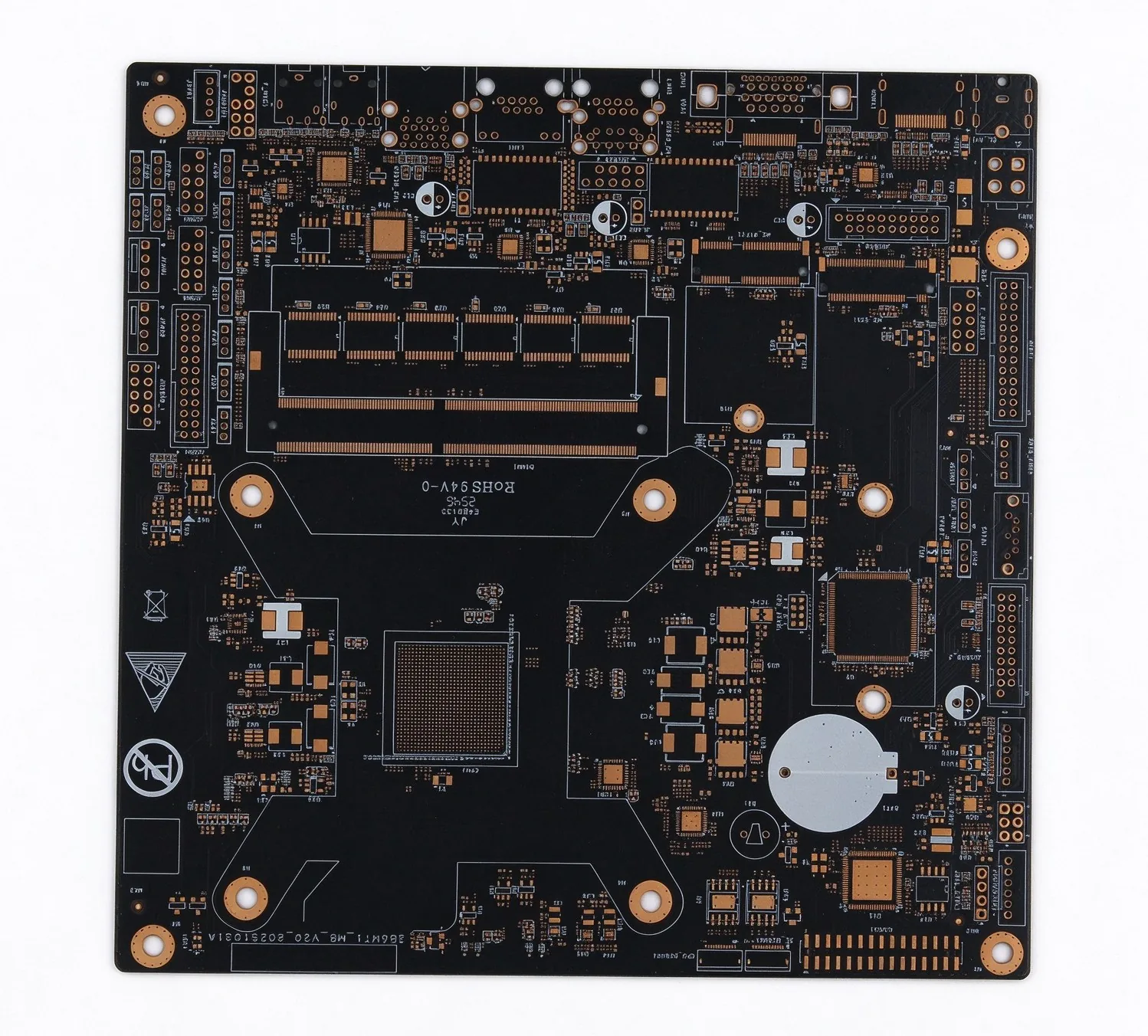
10-layer ENIG control board
Mixed-technology control board for continuous-duty drives, built on a 10-layer multilayer stack-up with ENIG and an impedance coupon pulled from every lot.

What buyers ask to see before they send files: the board itself, the finish that went on, and the process window that decided the quote. Each entry opens the board type it was built as.
A case study written by a marketing team reads the same for every supplier. A photograph of a 16-layer board, with the sentence explaining what made it awkward to build, does not. So each entry carries three things and nothing else: the board, one sentence on the constraint it sits closest to, and a link to the page holding the limits it was built to.
Nothing here is stock photography. A board enters the gallery after it ships and the customer agrees to it, and it leaves if the customer later asks. The board-type pages and the capability hub draw from the same set, so what is shown here is what the plant has actually run.
Grouped by application rather than by layer count, because that is how a brief usually arrives — a device, a thermal problem, a connector that has to survive a bend. Board type, finish and any tolerance named in the sentence are the ones used in quotation.
Mixed-technology control board for continuous-duty drives, built on a 10-layer multilayer stack-up with ENIG and an impedance coupon pulled from every lot.
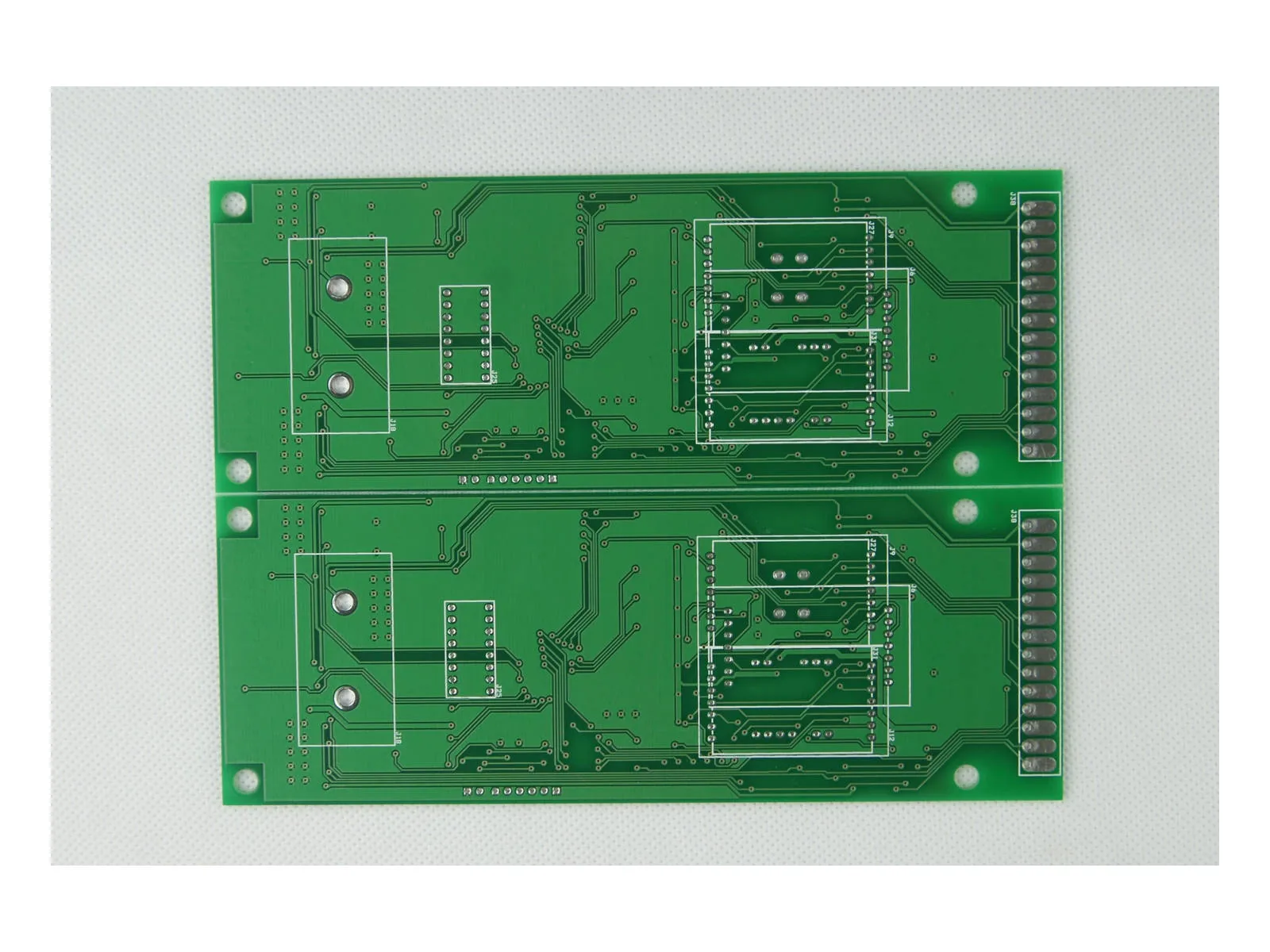
Two-layer board at 1.6 mm with HASL, used where the BOM has no fine-pitch part and the cost of a multilayer stack-up cannot be justified by the routing.
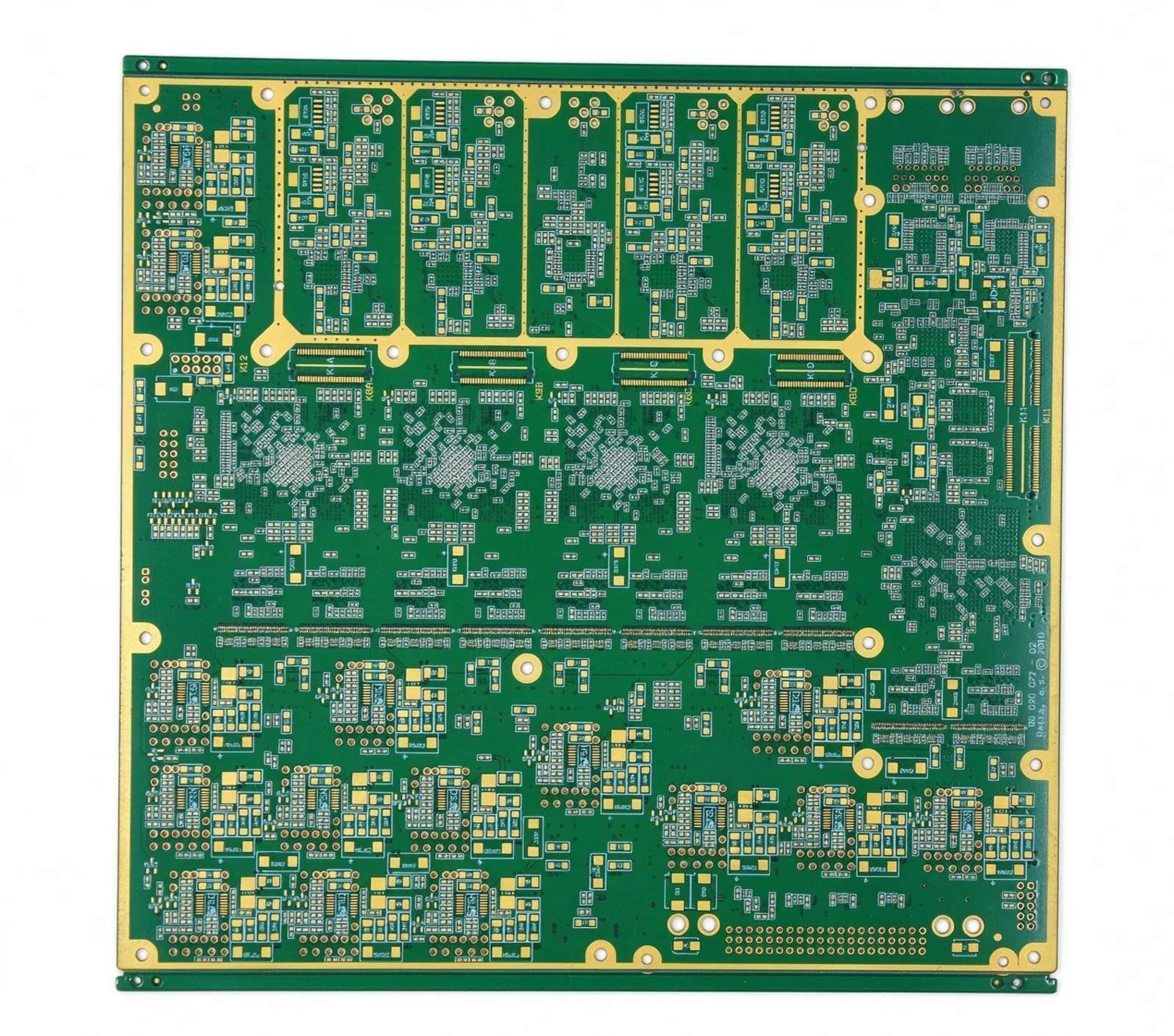
Accelerator-card board at 0.4 mm BGA pitch, using any-layer microvias and 0.075 mm lines; the via stack was agreed before the drill schedule was released.
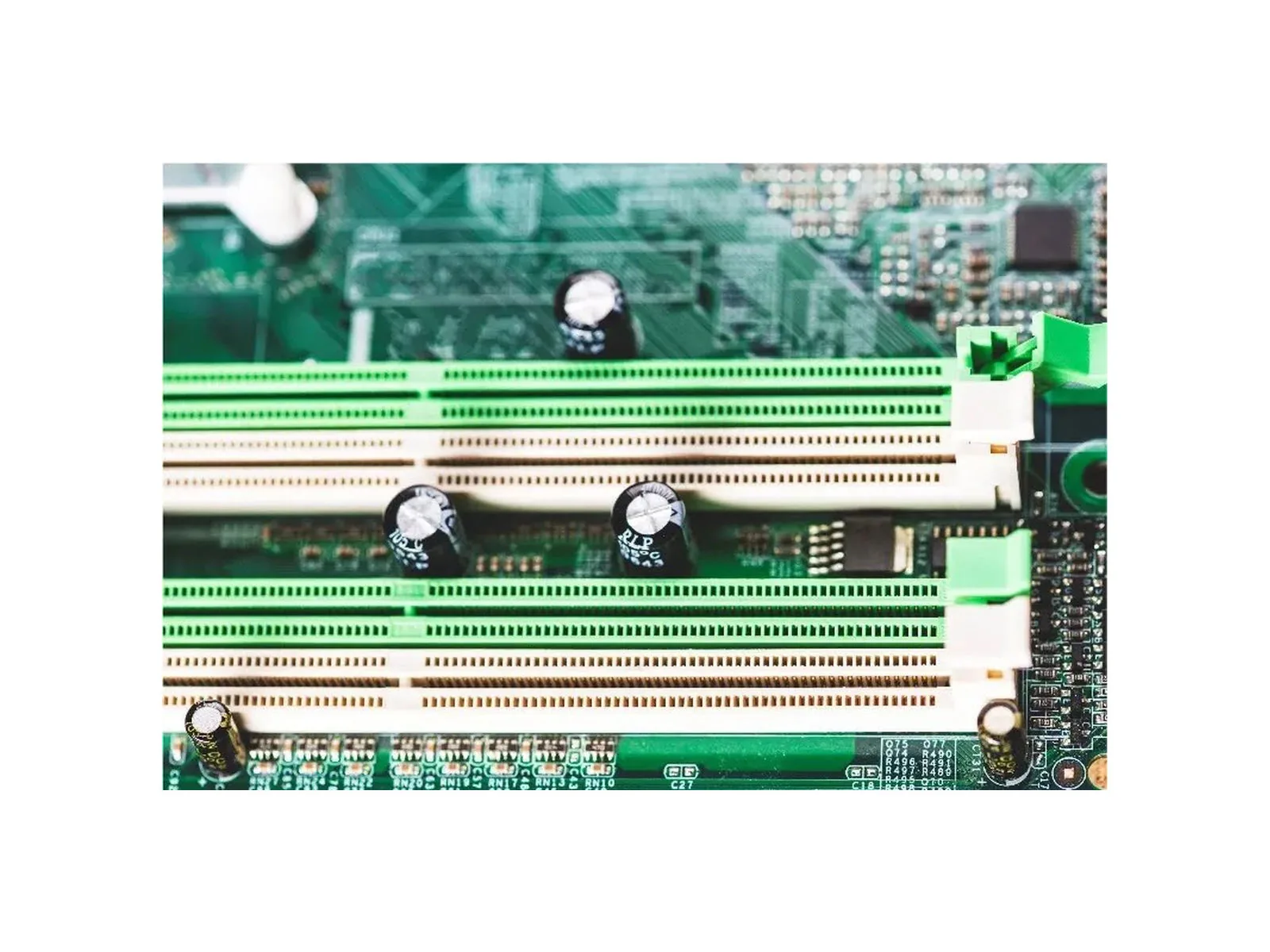
Storage-chassis backplane with press-fit DIMM connectors; assembly runs on the same site, so the connector footprint and the drill pattern are checked against one drawing rather than two.
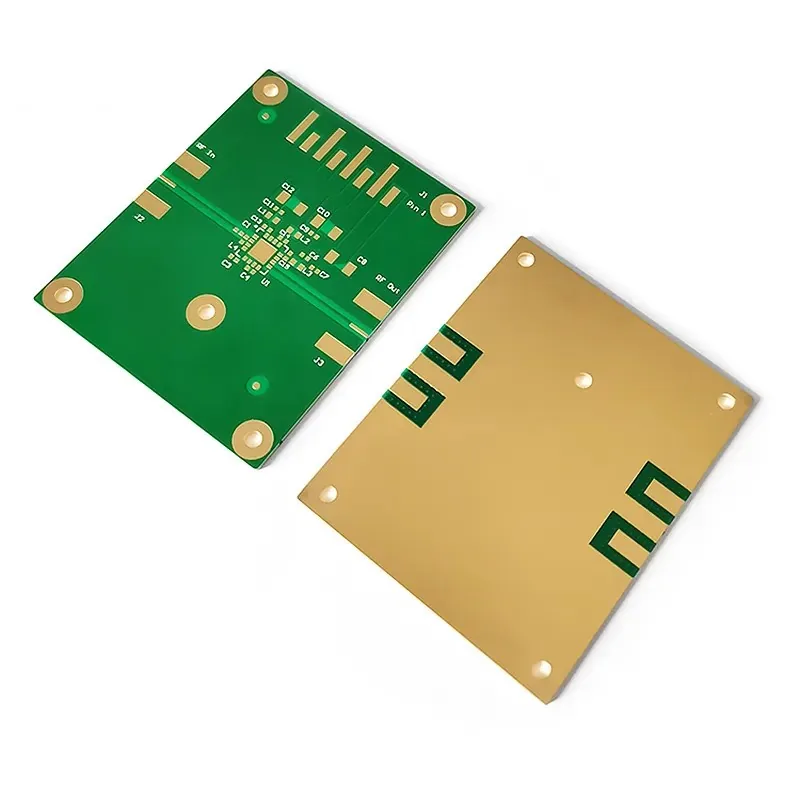
Front-end on Rogers 4350B with an FR-4 core, where the RF laminate is verified on coupon at 28 GHz before the panel is released to drilling.
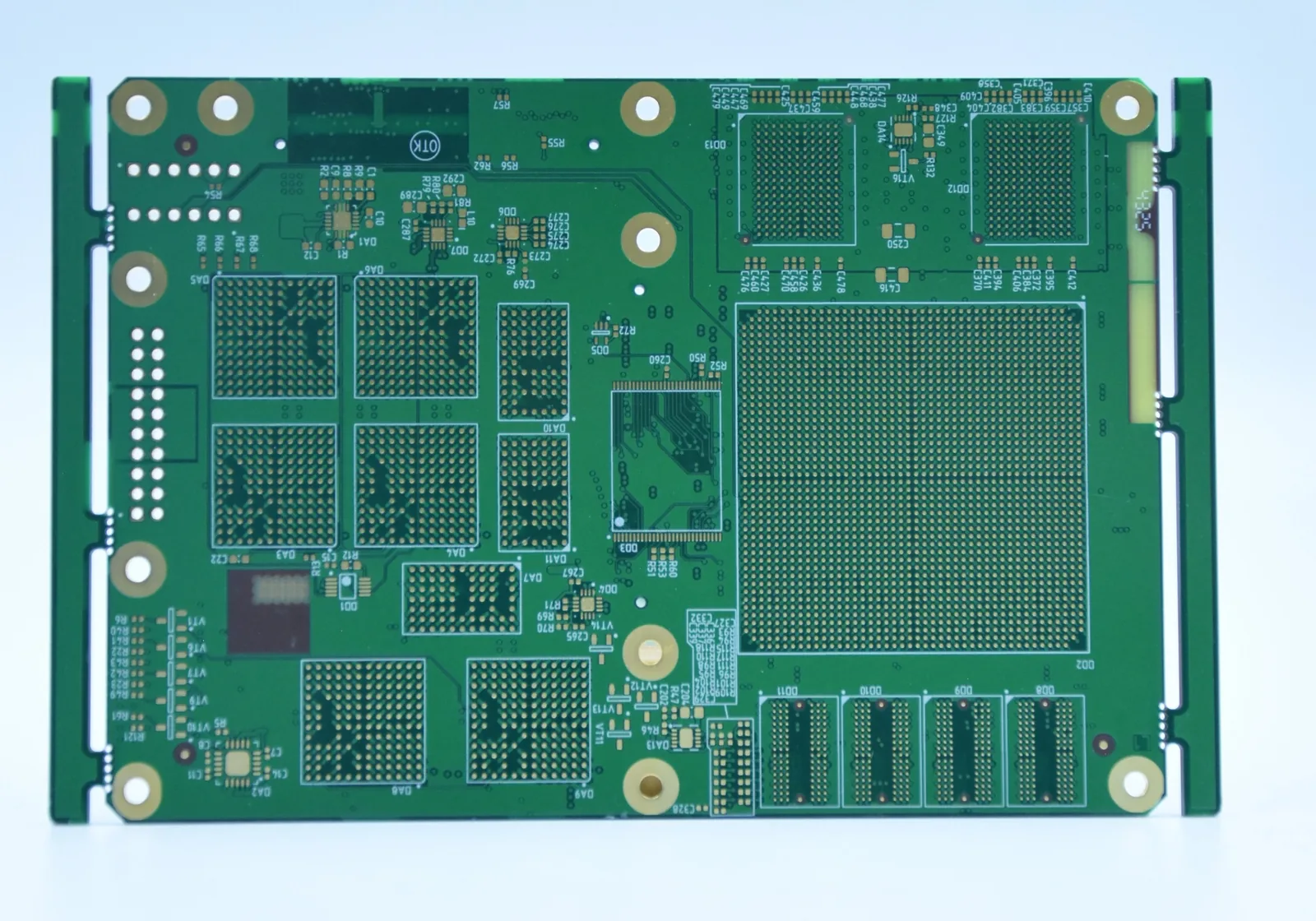
Networking board with immersion silver and back-drilled vias; stub depth is held at ±0.05 mm so the residual stub does not notch the channel at the top of the band.
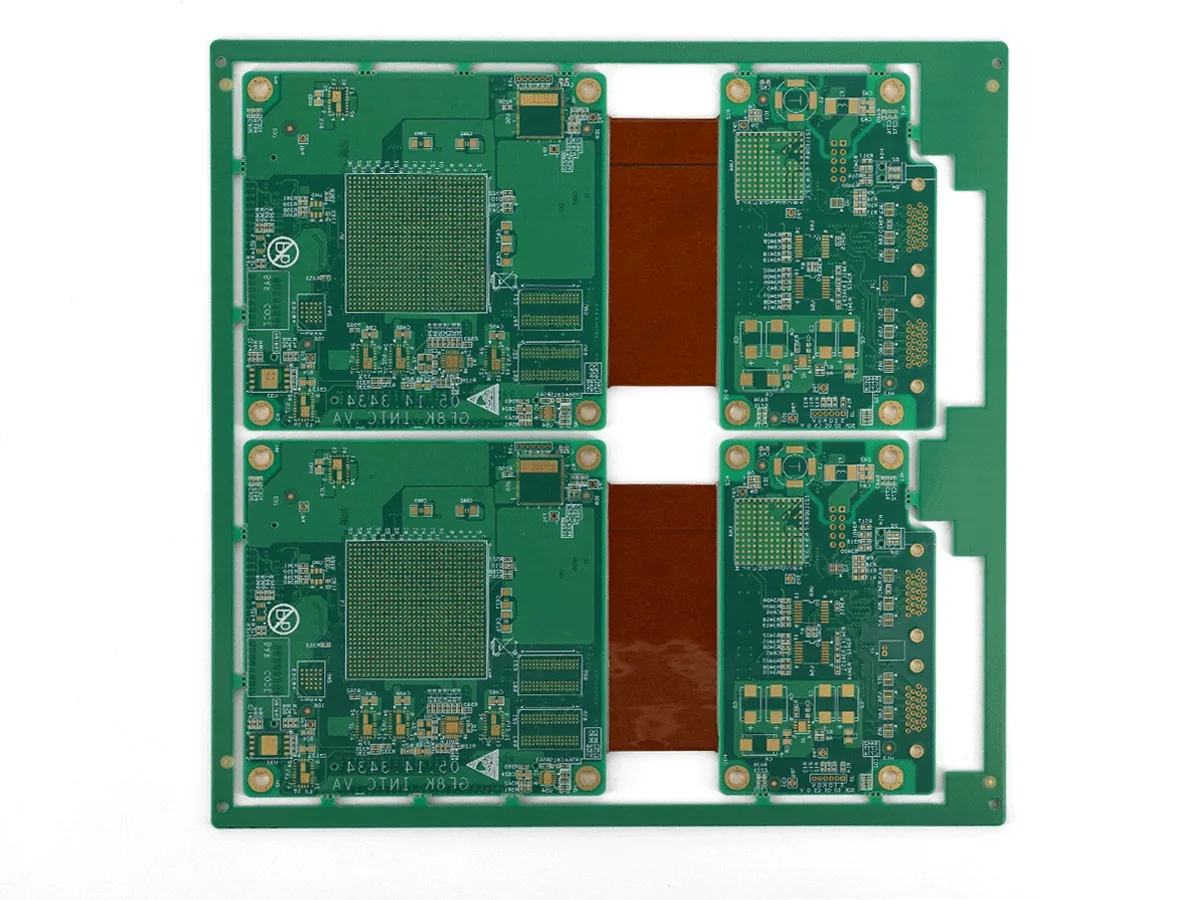
Sensor interface for a portable diagnostic device: 6-layer rigid sections joined to 0.2 mm polyimide flex, with stiffeners bonded behind each connector so the bend area stays clear of the solder joints.
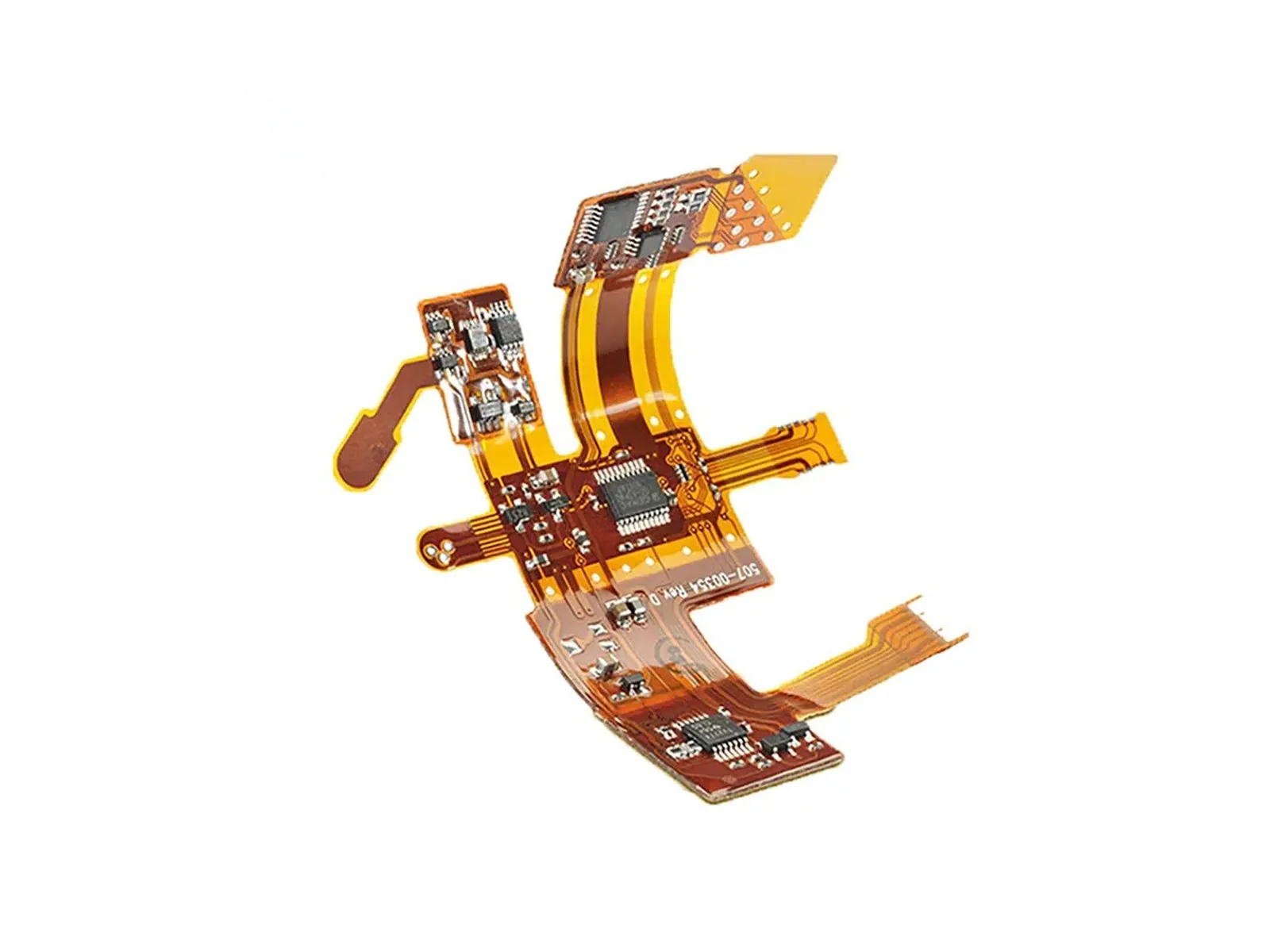
Single-sided polyimide flex with stiffeners at both connectors, bent to fit a handheld housing; the cost case against rigid-flex is worth running before the construction is fixed.
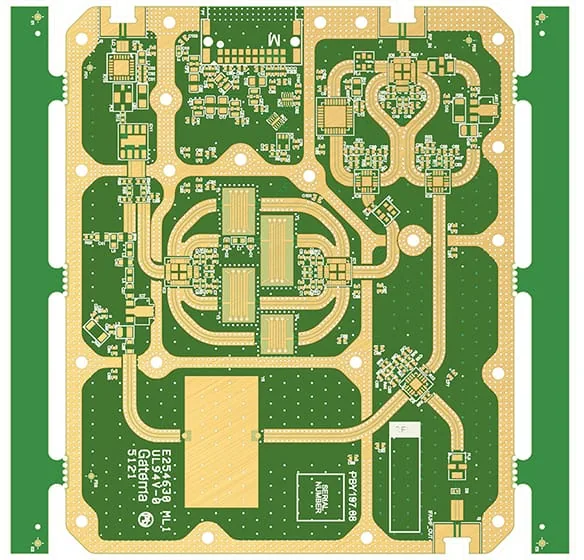
Outer-layer powertrain board carrying motor current, with thermal vias under the FETs; the etch allowance is quoted with the panel because 4 oz undercuts differently from 1 oz.
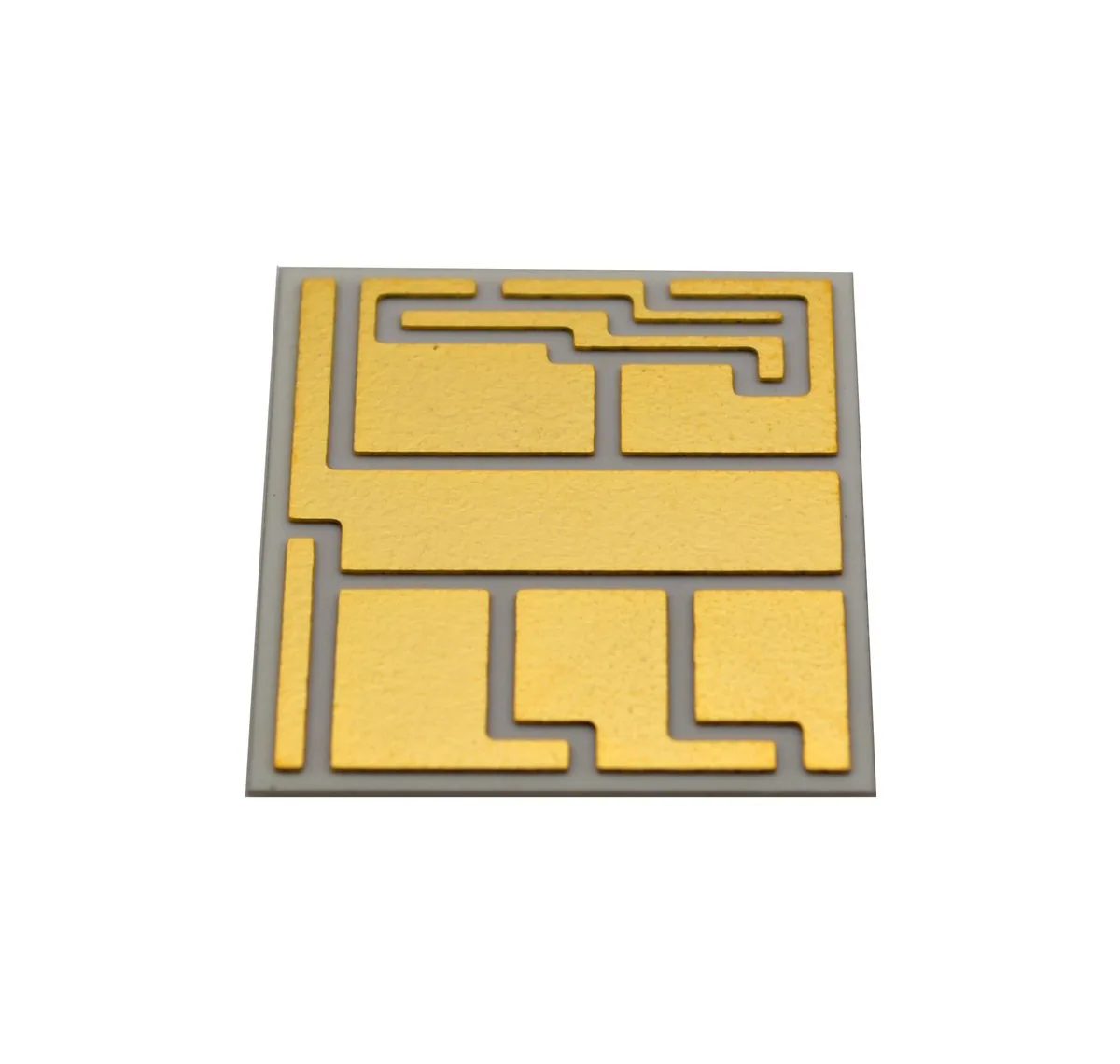
AlN substrate under an RF power amplifier, carrying heat at up to 170 W/m·K through the ceramic; the comparison with FR-4 thermal paths is the reason the part exists.
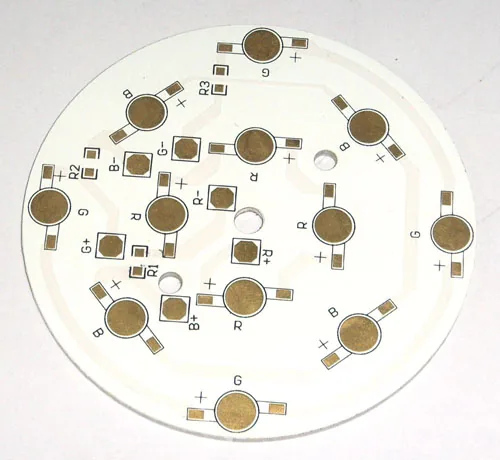
Aluminium-core driver with a 1–3 W/m·K dielectric, laid out so the thermal pad sits directly under the array instead of at the board edge.
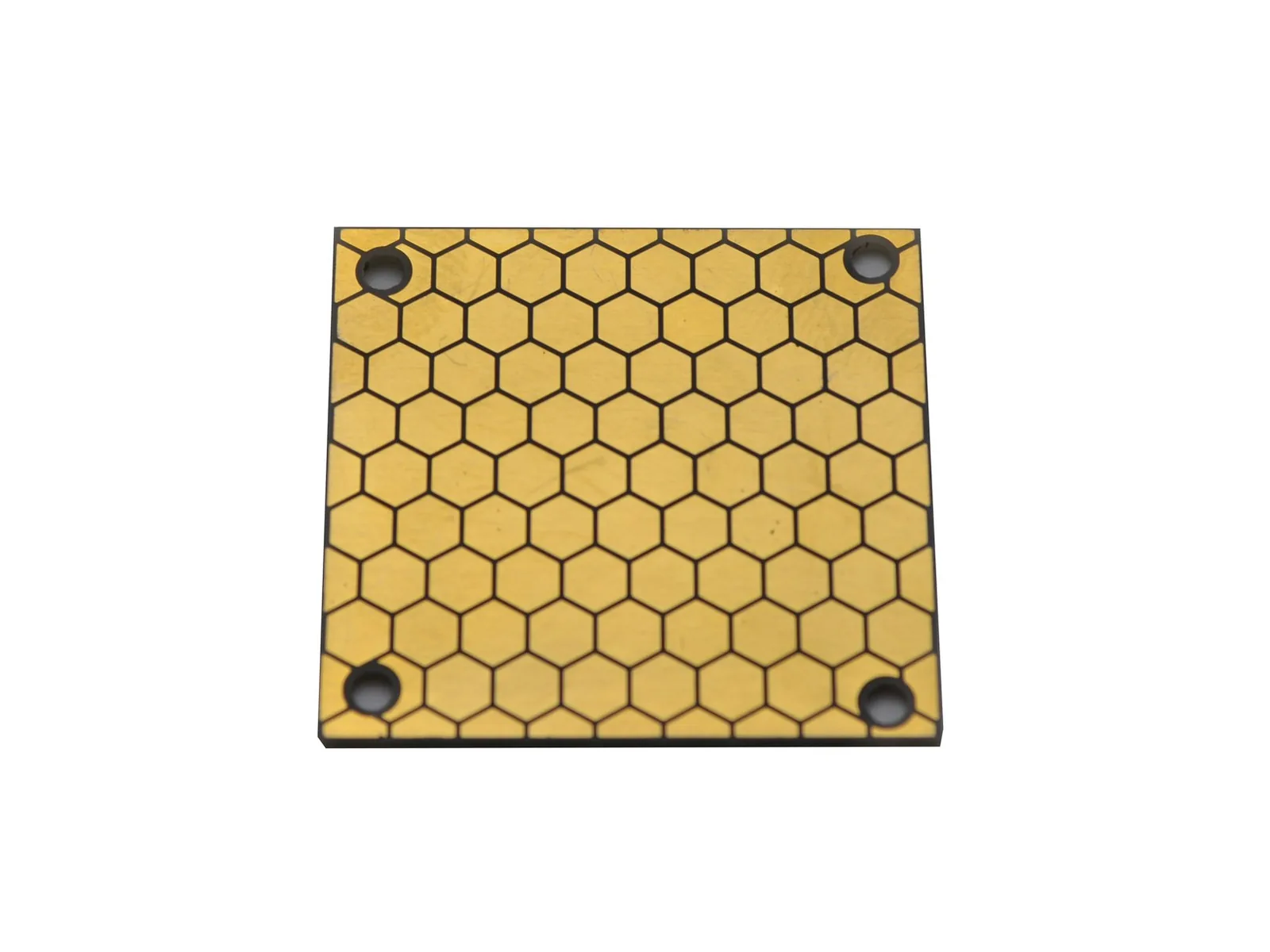
Alumina substrate with a thick-film copper pattern for a power module, where the copper mesh spreads heat while leaving isolation between pads; material choice is covered under materials.
The boards are, the photographs are ours. Nothing appears here without the customer agreeing to it, and where a customer would rather not be shown at all, the build is left out rather than blurred.
Ask. Most of what the plant runs is never photographed, and a board close to yours can usually be described — layer count, finish, the process window applied — without showing anyone else’s design.
They come from the same source. Board type, finish and any tolerance named in the sentence are the ones used in quotation, and every title links to the page carrying the full table.
After a build ships and the customer agrees, not on a calendar. The board-type pages and the capability hub read the same library, so a new entry appears in all three places at once.
A stack-up and a quantity are enough to say which of these the job resembles, and where yours differs. Quote in 24 hours when the files are complete. Every build runs to IPC Class 2 standard, Class 3 on request.